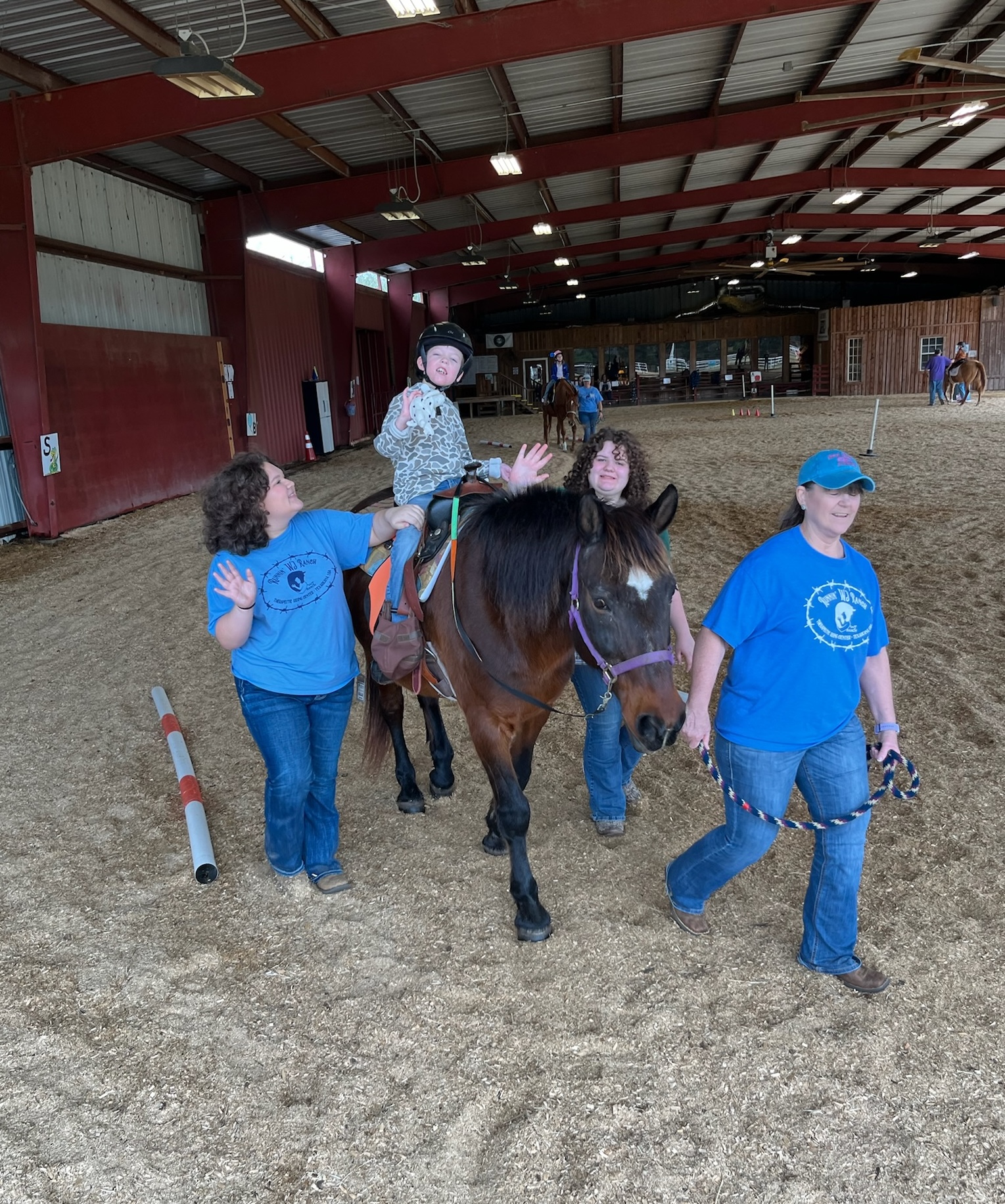
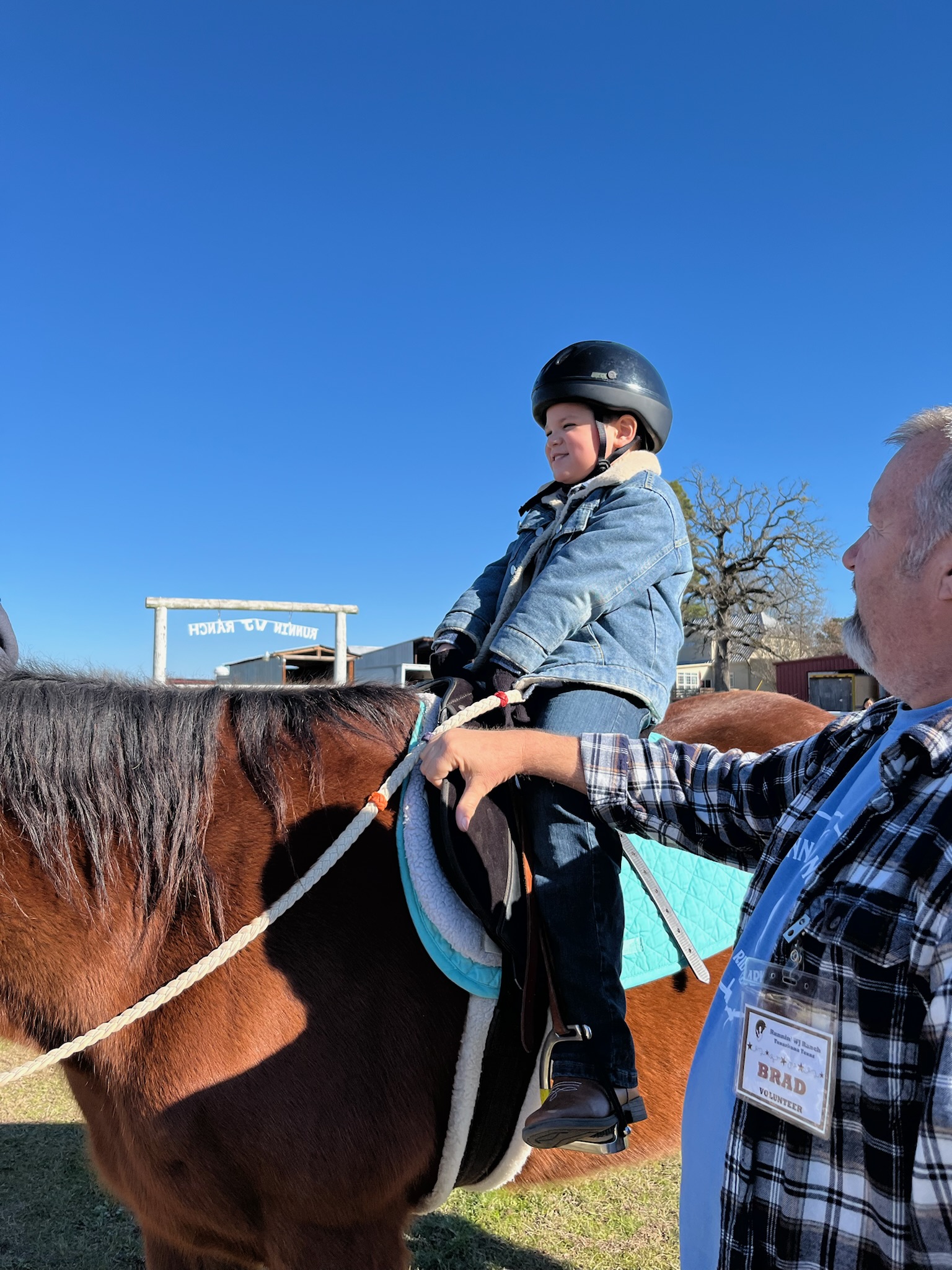
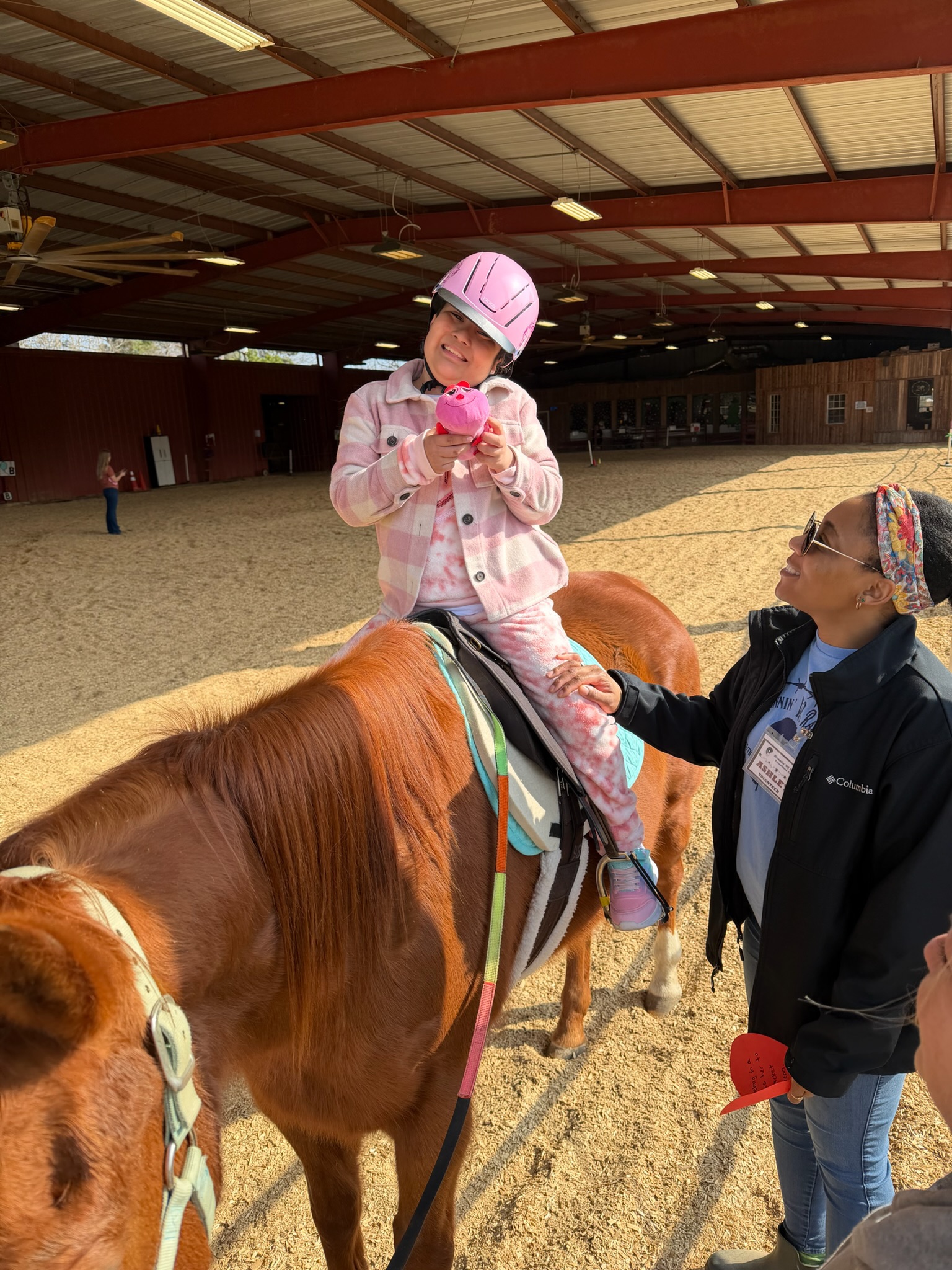
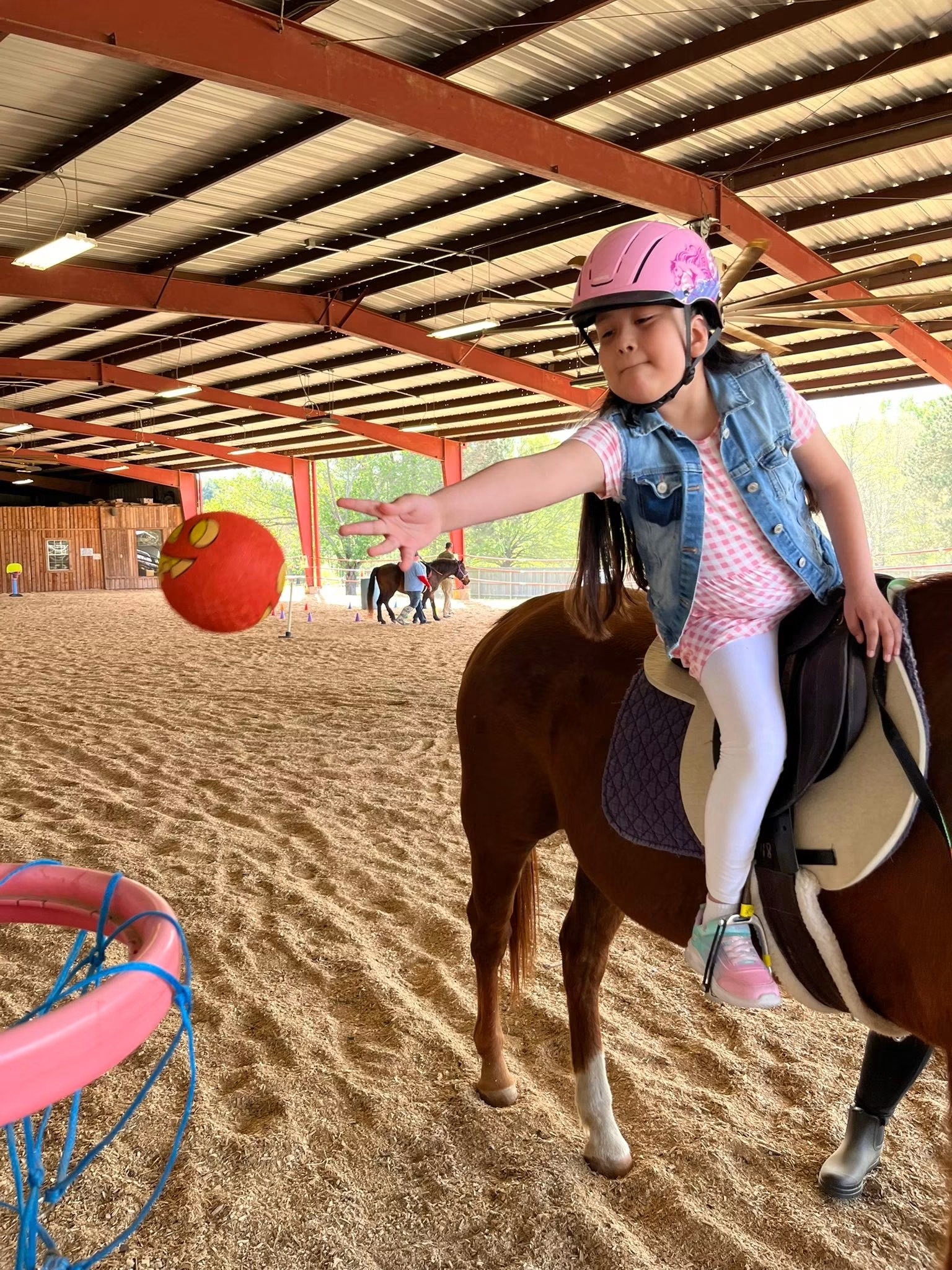
Equine-assisted services, or EAS, is a structured therapeutic framework in which certified instructors use horseback riding to support development across four key areas: physical, cognitive, emotional, and social. It's what most people mean when they say "horse therapy" and the outcomes it produces are more specific, and more well-documented, than many families expect.
The starting point is the horse's movement. A horse's walking gait produces a three-dimensional rhythmic pattern that closely mimics the human walking gait. When a rider is mounted, that movement travels through the saddle and into the rider's body activating core muscles, stimulating balance responses, and engaging neurological pathways in ways that are genuinely difficult to replicate in a clinical setting. That's the foundation everything else builds on.
From there, the benefits branch in four directions. Each one is worth understanding on its own.
- Physical benefits: core strength, balance, coordination, and postural control
- Cognitive benefits: attention, sequencing, following directions, and problem-solving
- Emotional benefits: confidence, self-regulation, and reduced anxiety
- Social benefits: turn-taking, peer awareness, and interaction with adults outside the family
Runnin' WJ Ranch is a PATH International Premier Accredited, 501(c)(3) nonprofit serving riders with disabilities in Texarkana, TX since 2001.
Learn About Our Program