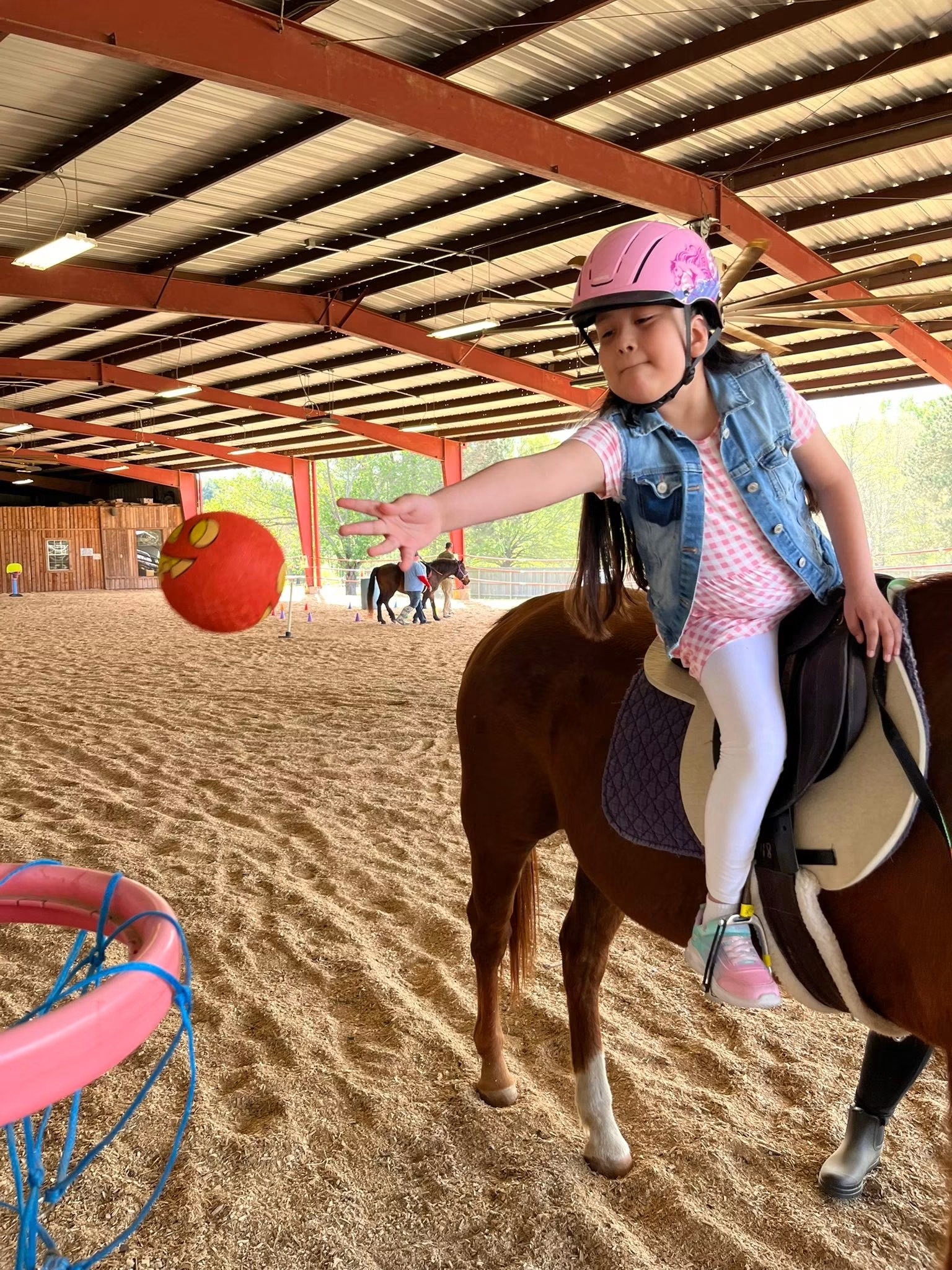
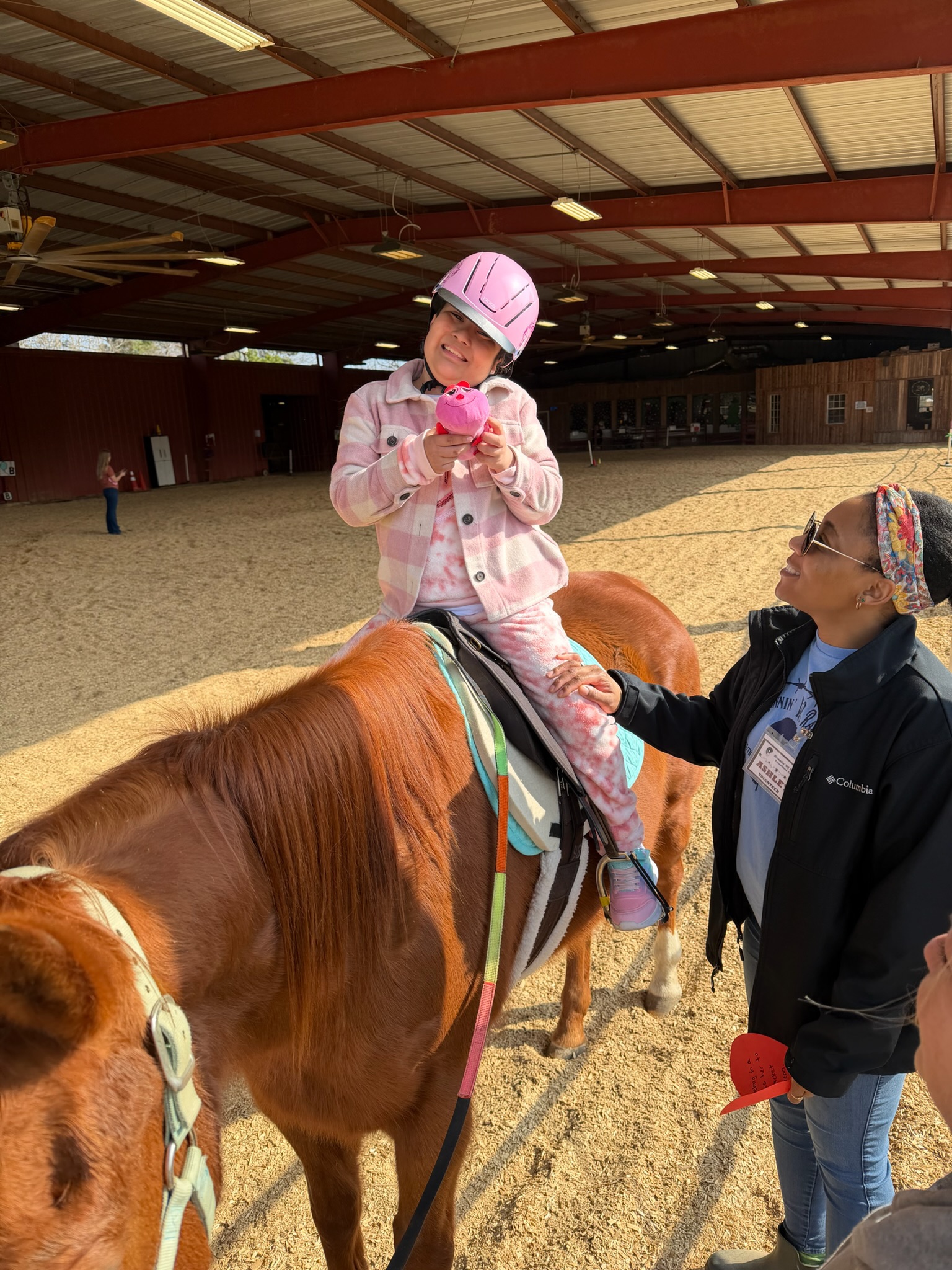
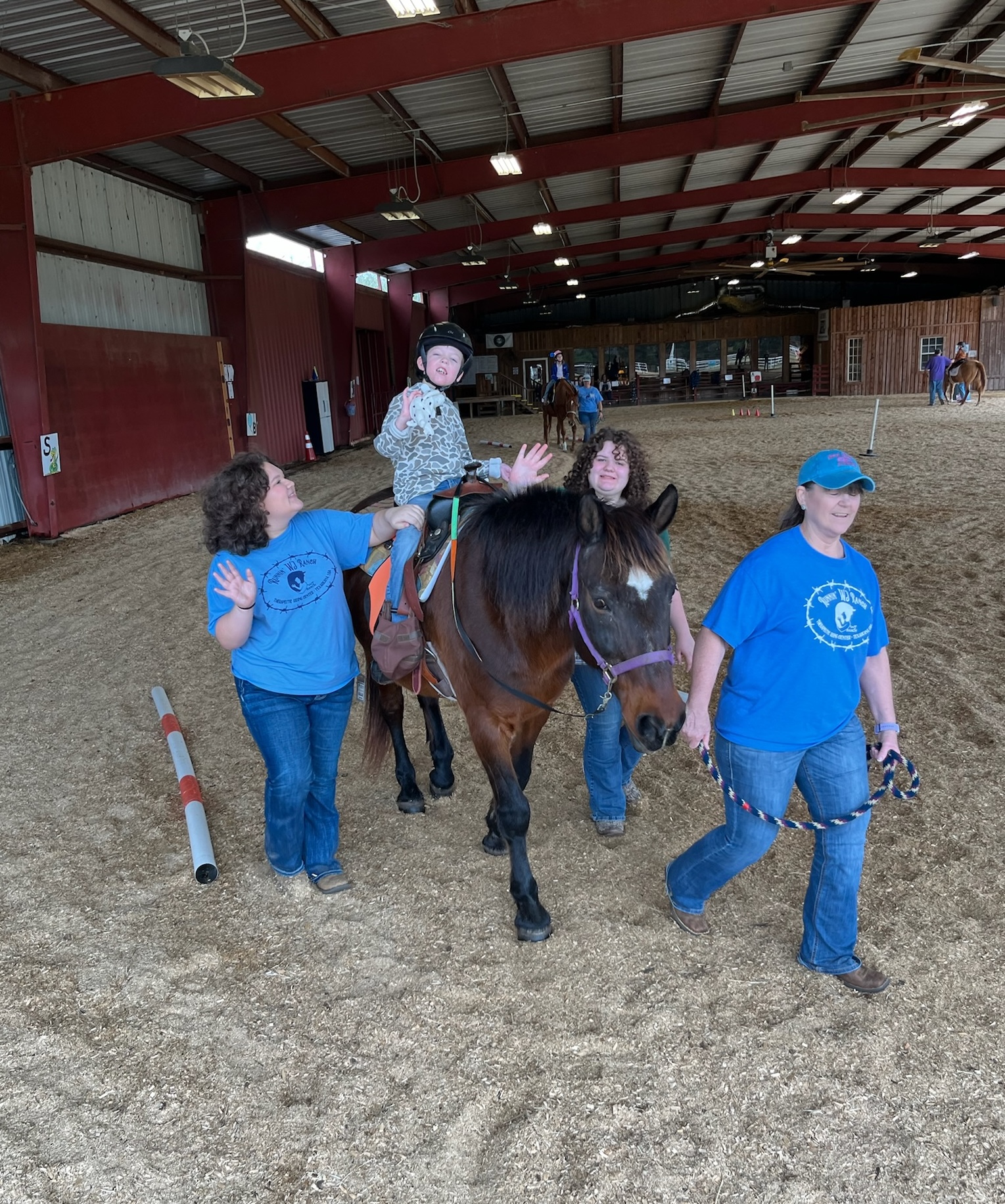
One of the most well-documented aspects of equine-assisted services is what happens physically when a rider is mounted. The horse's three-dimensional walking gait moving forward, sideways, and rotationally, produces rhythmic movement that travels through the saddle and into the rider's body. The rider's muscles respond continuously to maintain position, producing physical engagement that's difficult to achieve in a clinical setting.
Over time, riders typically develop improvements in:
- Core strength and muscle tone
— sustained postural engagement throughout each session
- Balance and coordination
— the horse's movement requires constant active adjustment
- Flexibility and range of motion
— particularly in the hips and lower body
- Body awareness
— riders develop a clearer sense of their own position in space
To name just a few disability-specific physical benefits, riders with cerebral palsy can experience reduced muscle spasticity and improved gait over time, while riders with Down syndrome can build strength and coordination that carries into everyday movement.
These benefits
are part of why equine-assisted services are frequently recommended by occupational therapists, physical therapists, and special education professionals as a complement to traditional therapy.
Learn About Our Program