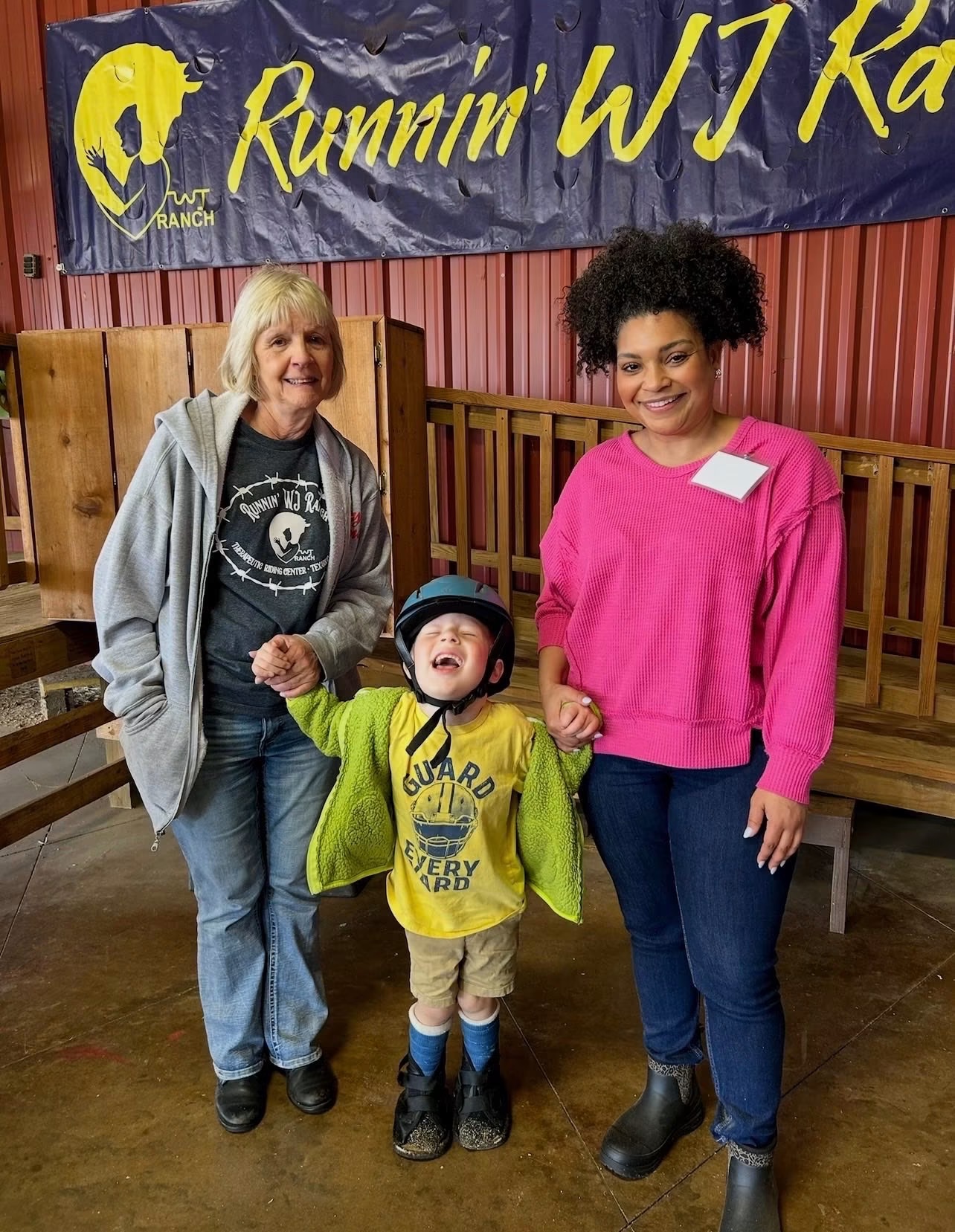
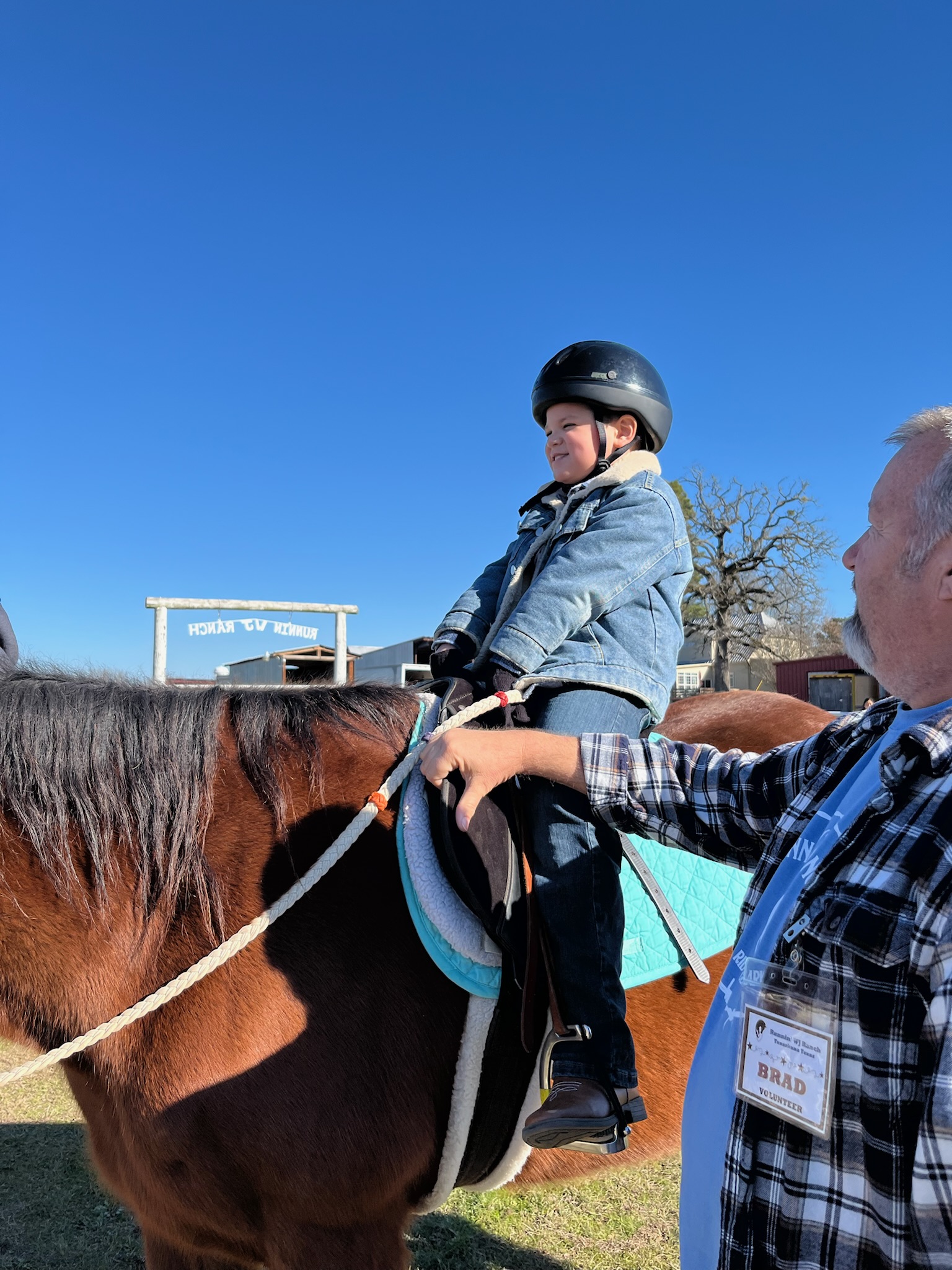
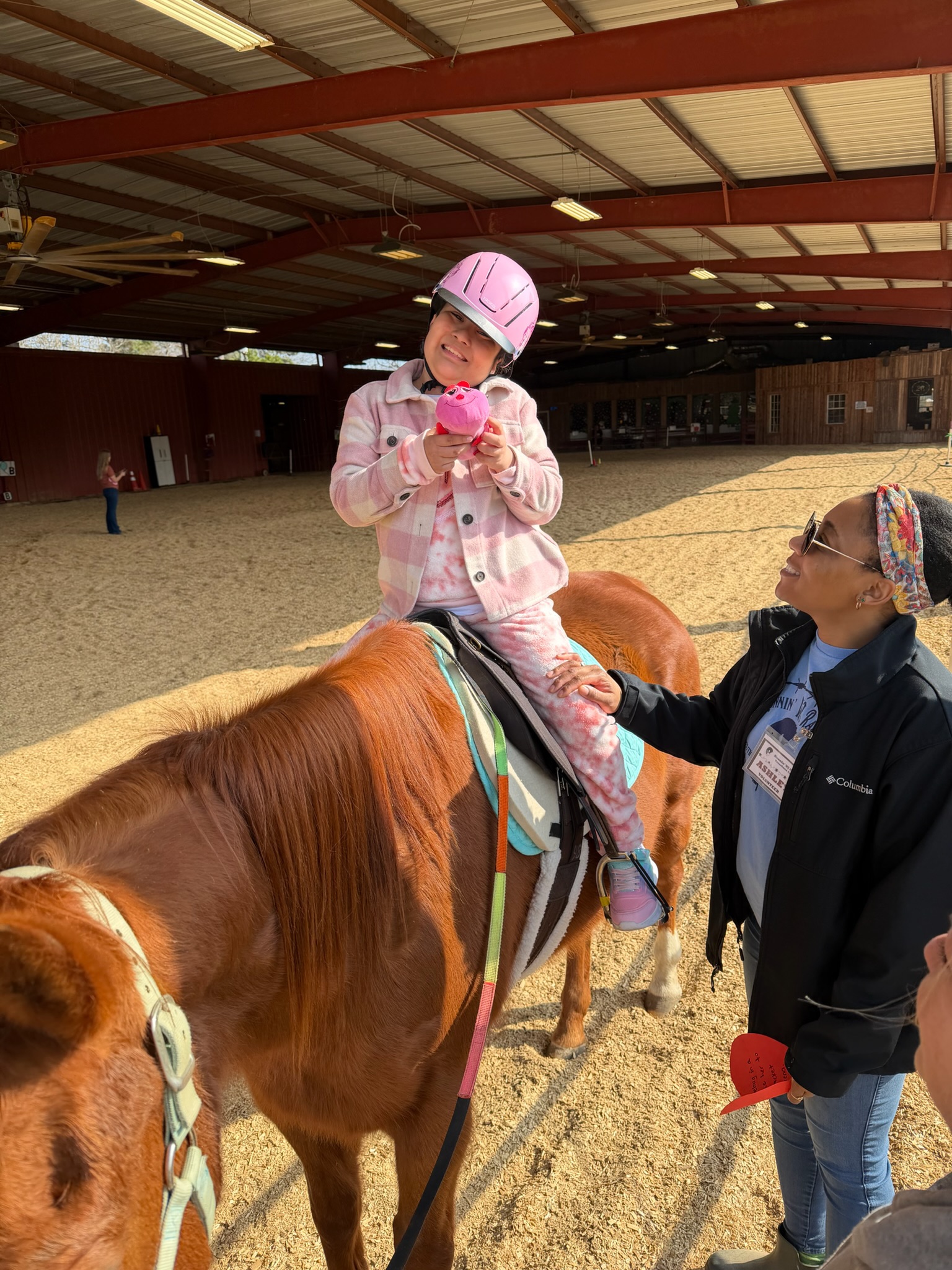
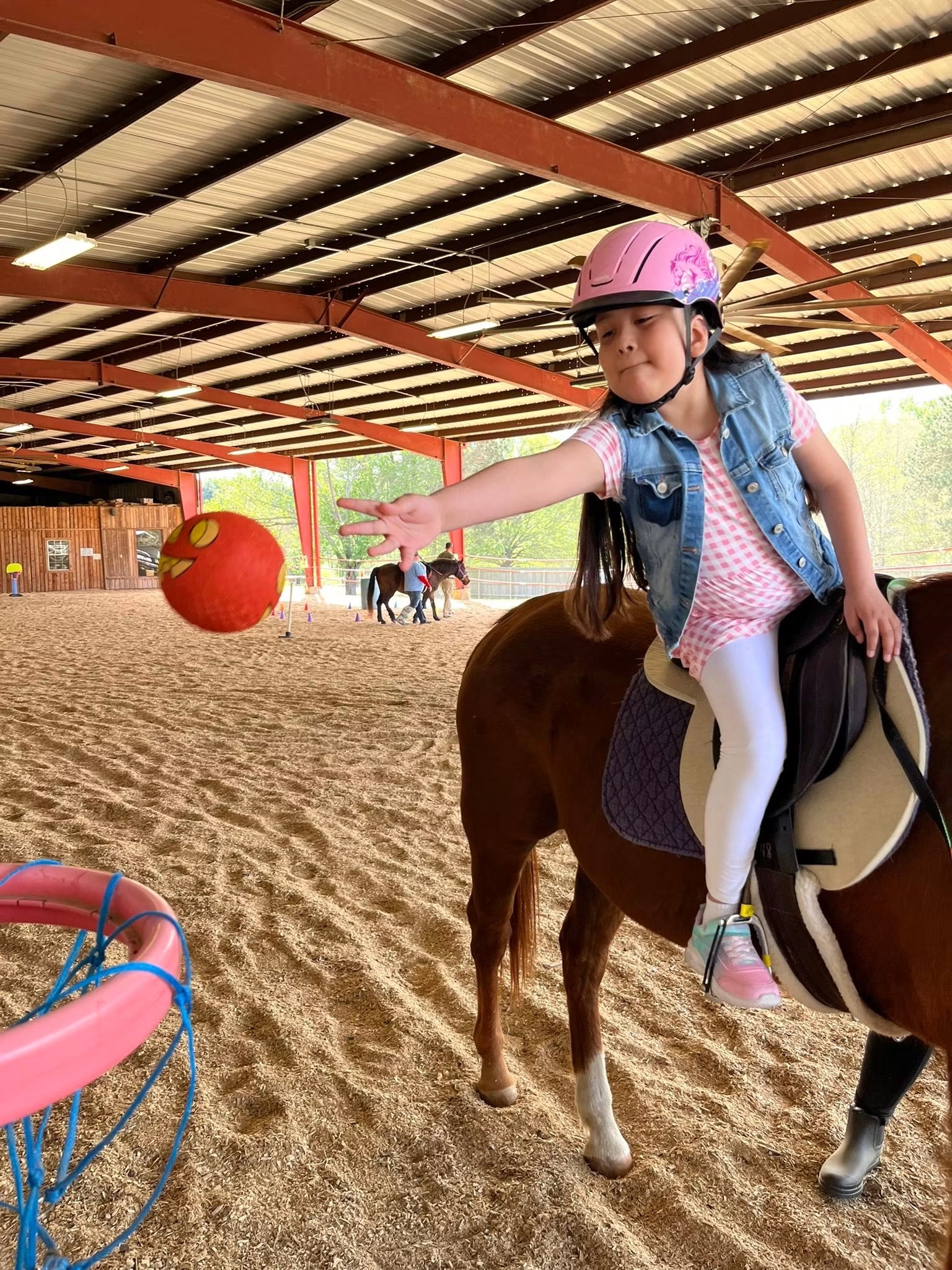
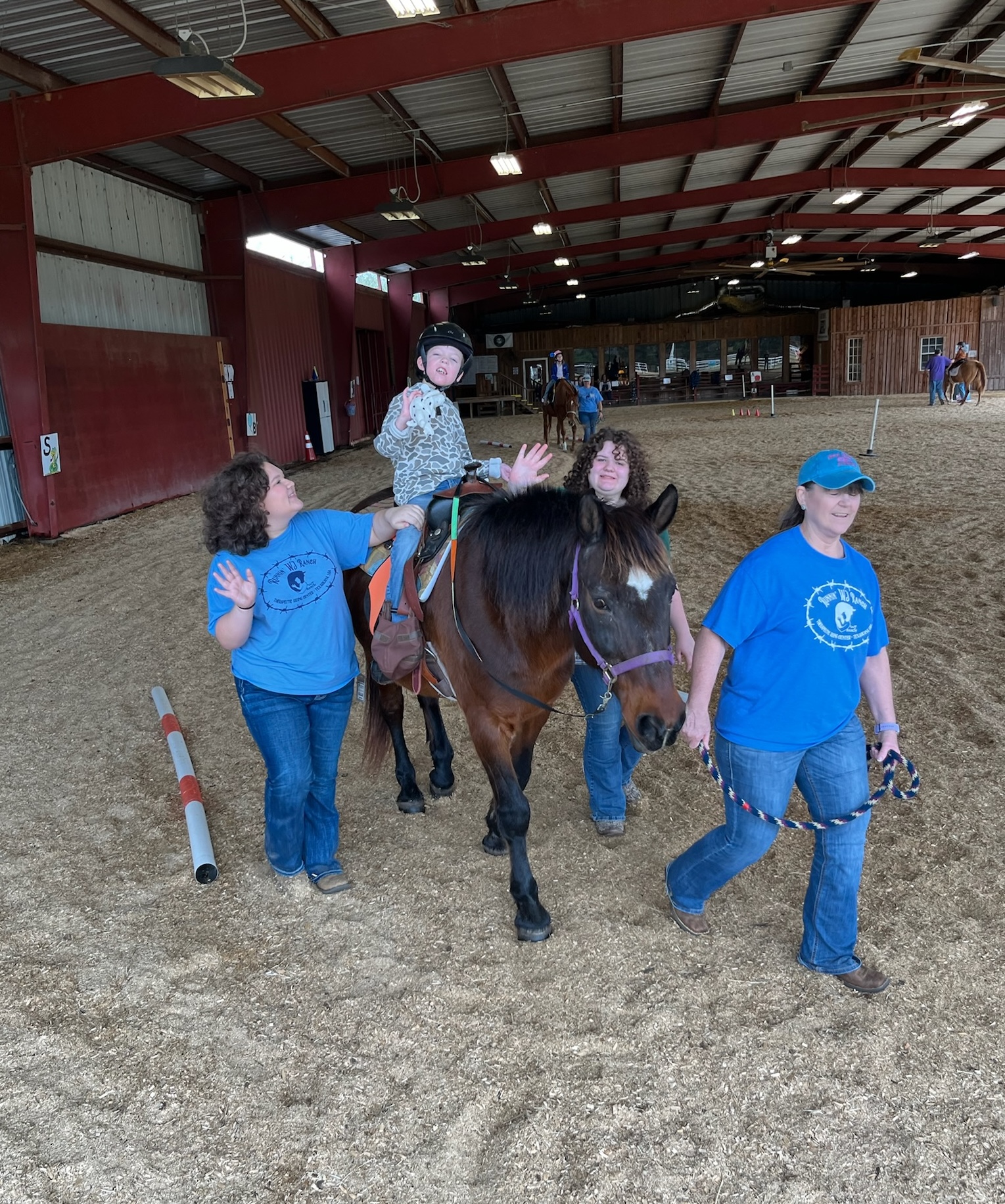
Equine-assisted services don't happen in isolation. Sessions take place in a small group setting of six riders maximum with a certified instructor, a horse leader, and side-walkers present throughout. That structure, by design, creates consistent opportunities to practice social skills in a real, low-pressure environment.
Riders practice:
- Taking turns
— sessions are structured around sequence and participation, not just individual performance
- Following group direction
— the class format mirrors the social demands of school and community settings
- Building relationships with adults outside the family
— instructors and volunteers become familiar, trusted presences over a full season
- Peer awareness
— riders notice and respond to classmates, often forming connections that extend beyond the arena
For riders with autism spectrum disorder, Down syndrome, or social-emotional delays, this is frequently the benefit families cite as most transferable. Skills practiced in the arena show up in the classroom, at the dinner table, and in the community and not because they were explicitly taught as social skills, but because the environment required them naturally. Learn more about the benefits of equine-assisted services.
Learn About Our Program