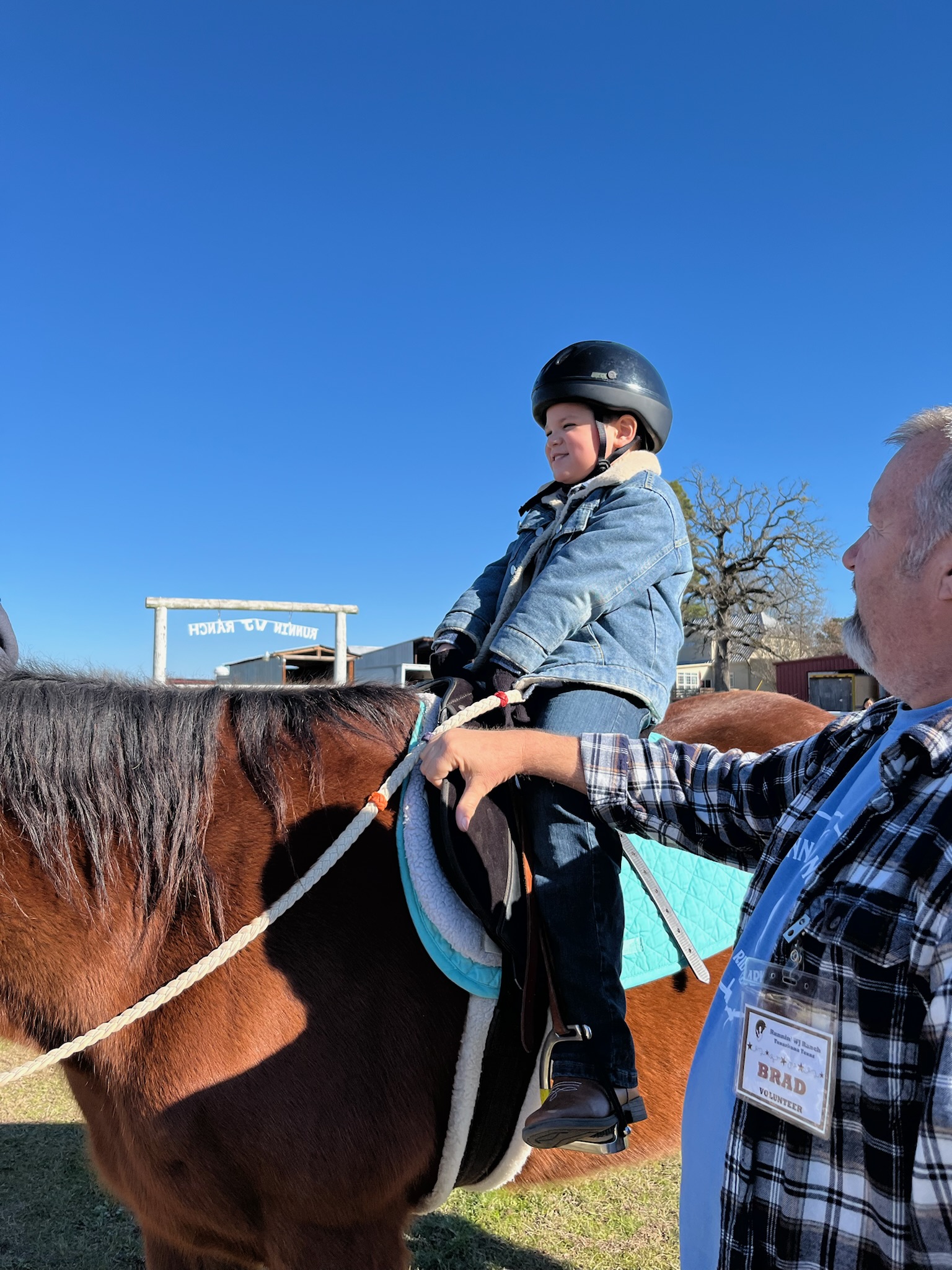
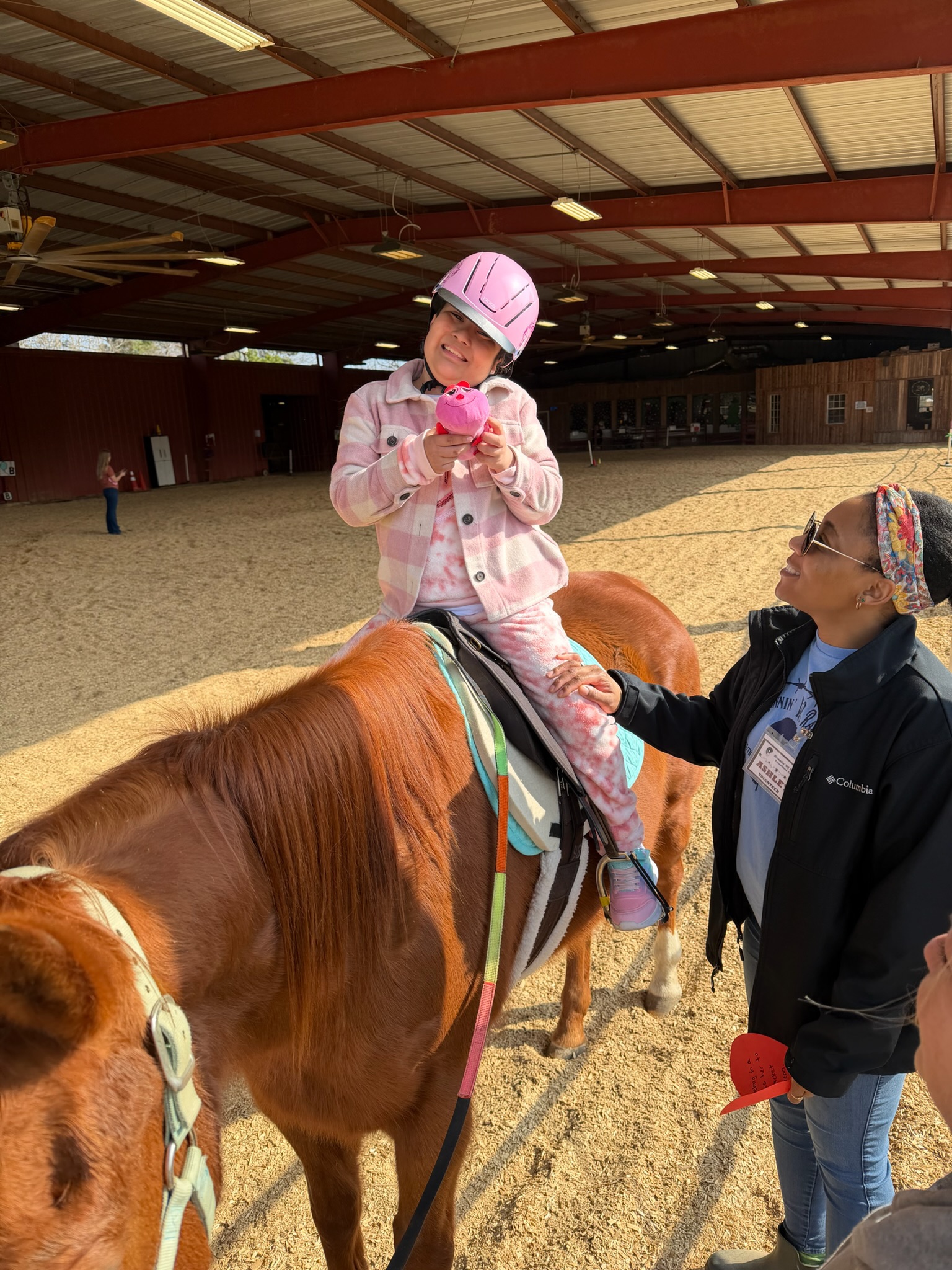
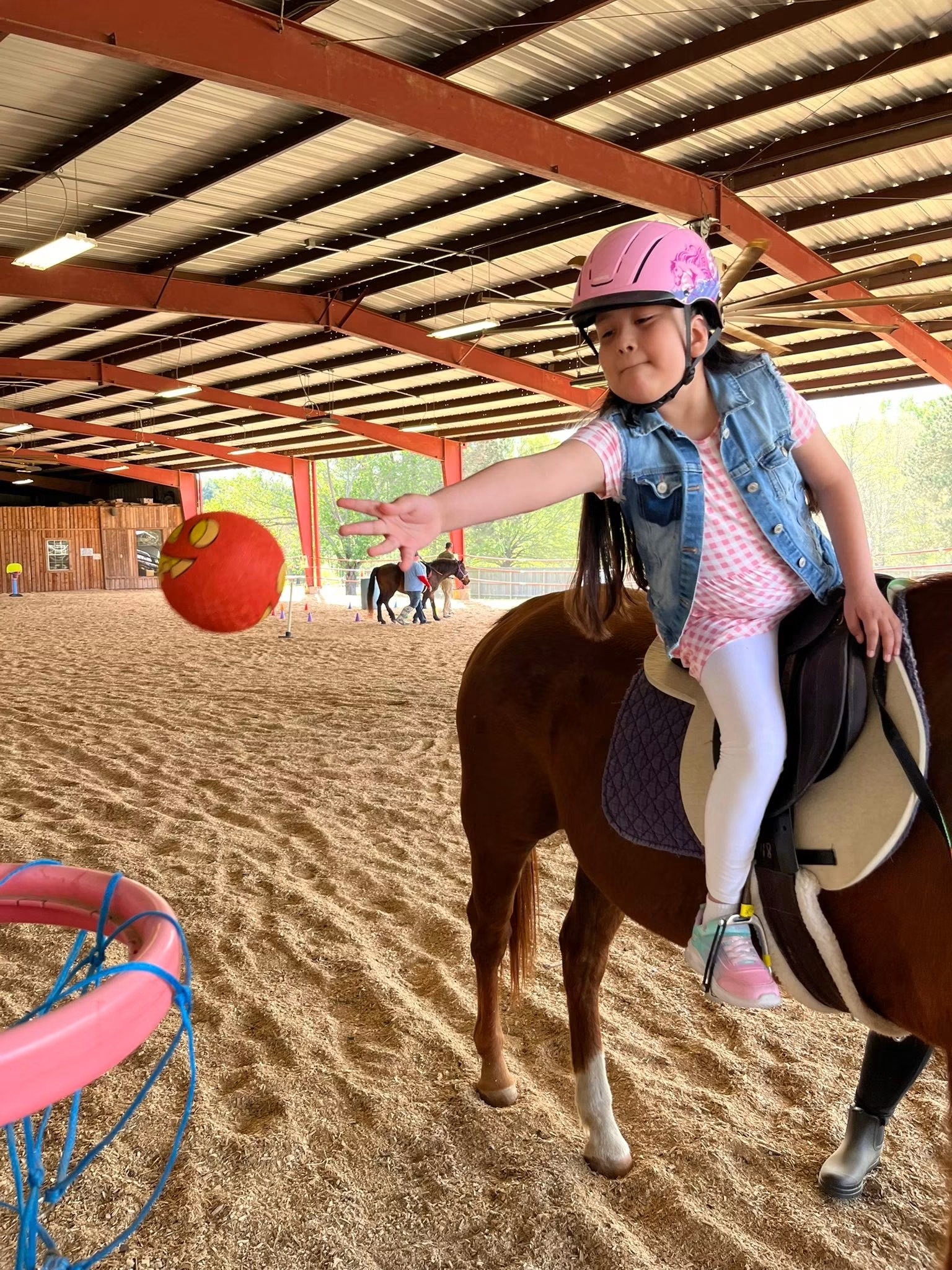
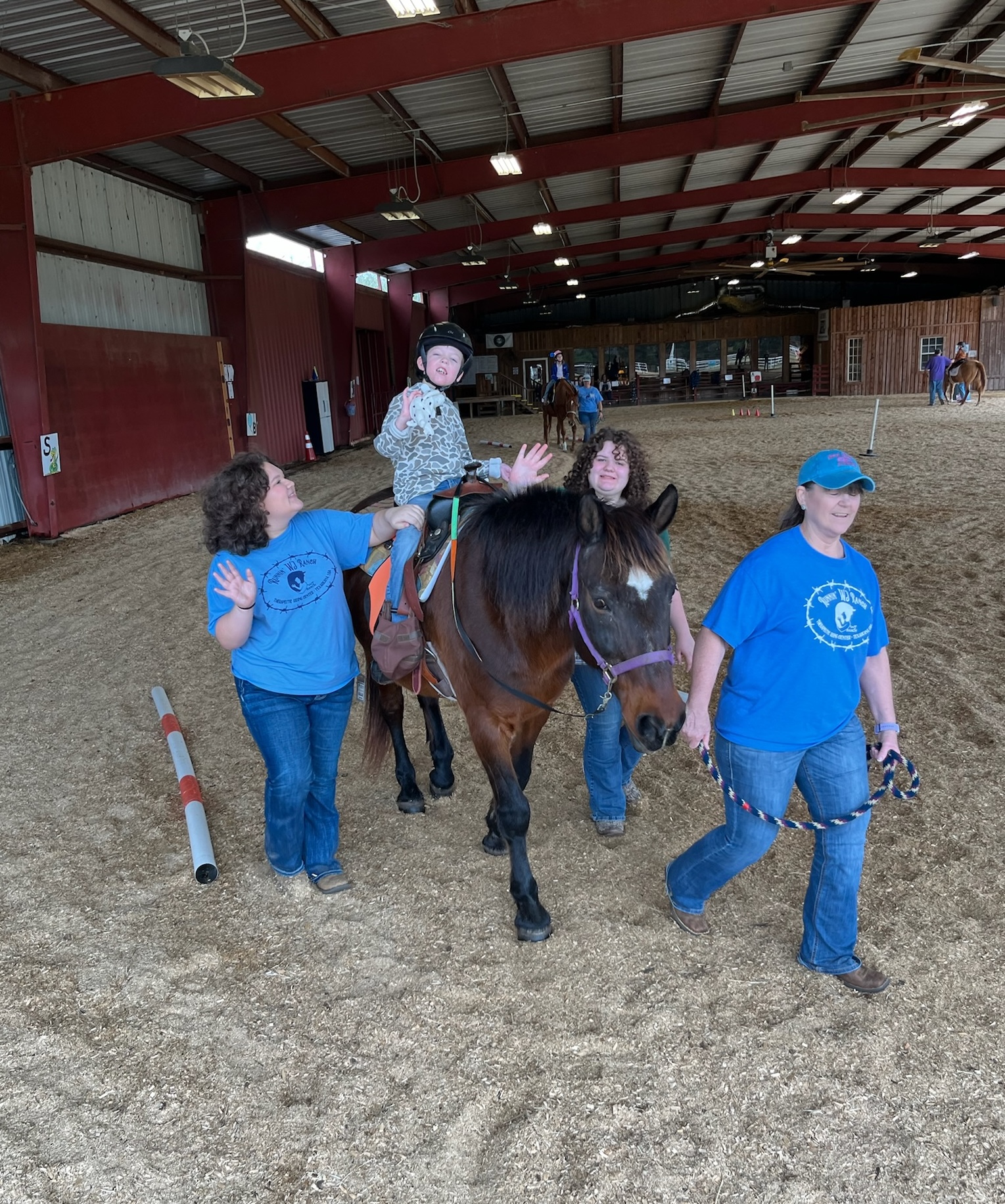
Families often say the emotional changes are the first thing they notice. Before strength improves or attention extends, something shifts in how a rider carries themselves and how they handle the world outside the arena.
Horses are sensitive to the emotional state of the people around them. They respond to calm with calm, and they signal discomfort when something is off. That real-time feedback loop gives riders something most therapeutic environments can't: an honest, immediate response to their own emotional regulation. Over time, riders learn to manage their state because the horse responds when they do.
Documented emotional outcomes in equine-assisted services include:
- Increased confidence
— successfully managing a large animal produces self-efficacy that carries well beyond the session
- Improved emotional regulation
— the feedback loop between rider and horse reinforces calm, regulated behavior
- Reduced anxiety
— the rhythmic movement and sensory environment of the ranch have a measurable calming effect for many riders
- Greater sense of accomplishment
— sessions include goals set and met, often for riders who rarely experience that elsewhere
For children and adults with behavioral and emotional disorders, this area of development is frequently the most significant and the most visible to families at home and at school. Traditional therapy environments don't always produce engagement. The ranch often does. Learn more about the benefits of equine-assisted services.
Learn About Our Program